Search This Blog

Thursday, 16 August 2012


It was 11th of July 2012 when Mr.Satish Kumar, MD Henkel India shared with us his Success story through his failures.  Enriching and thought-provoking speech led the students to admire his career path. As a supporter of primary education to illiterate girl children, he had taken us through many facets of his life journey. His work experience states that he had created many market strategies for Brand developing which in turn lost as the competitors had grabbed his strategies before they implemented.
The discussion lead us into some forms of management including :
a)    The speed of decision making
b)    The difference in the culture of markets
c)     Effects of differences in the internal structure of the company.

Shekar Arora, Executive Director, HR Stratefy, Ashok Leyland


On 16th July we had the privilege of listening to Mr. Shekar Arora, Executive Director Hr strategy at Ashok Leyland.
Armed with a Post Graduate in Personnel Management with specialization in Personnel Management and Industrial Relations, Mr. Arora joined Ashok Leyland in 1981. He has had considerable exposure to international academics and practices with more than 30 years of executive experience spanning a spectrum of industries: textile, chemical, steel and automobile. He has been contributing in areas of enhancing capabilities at both the organizational and individual levels and has introduced best practices in the area of industrial relations. He was awarded scholarship by George Warren Brown School of Social work, Washington University.
He also attended an Advanced Program in HRM at University of California, USA in the year 1996.
The session was very interactive with Mr. Shekar jotting down views expressed by students which formed the crux of his session.
He gave us an insight on how the various functions (HR, Marketing, Finance, IT) work and what impact each function has on business and emphasized on the USP of various functions.
He gave us a very detailed explanation on how a (automobile) company is started and what are the various factors and contingencies that need to be taken into account to start and later expand it. This was a very enlightening experience for us, since it gave us a look into startups from a very experienced person.
In short his session gave us in-depth knowledge about starting a business and the impact each function has on the success of it.

Friday, 27 July 2012

The middle of induction program had a session with Mr Ramakrishnan leading the students into the chasm of balance.The session was a discussion for following the essential way in balancing work and personal life often stressing on truth and visibility both in terms with work teams and family.
The session also saw some brilliant splitting of prefixes and suffixes by Mr Ramakrishnan in the process of explaining the states that ought to be achieved if one were to focus on attaining balance in their lives.
the session was also filled with some hilarious moments when Mr Ramakrishnan started expounding on his life .
The end of the session saw Mr Ramakrishnan giving out a meditation exercise complete, with a background soundtrack, which refreshed the students and pushed them into a promising mood for their time in CBS.
Mr Ramakrishnan's credentials can be found here.

Wednesday, 6 June 2012

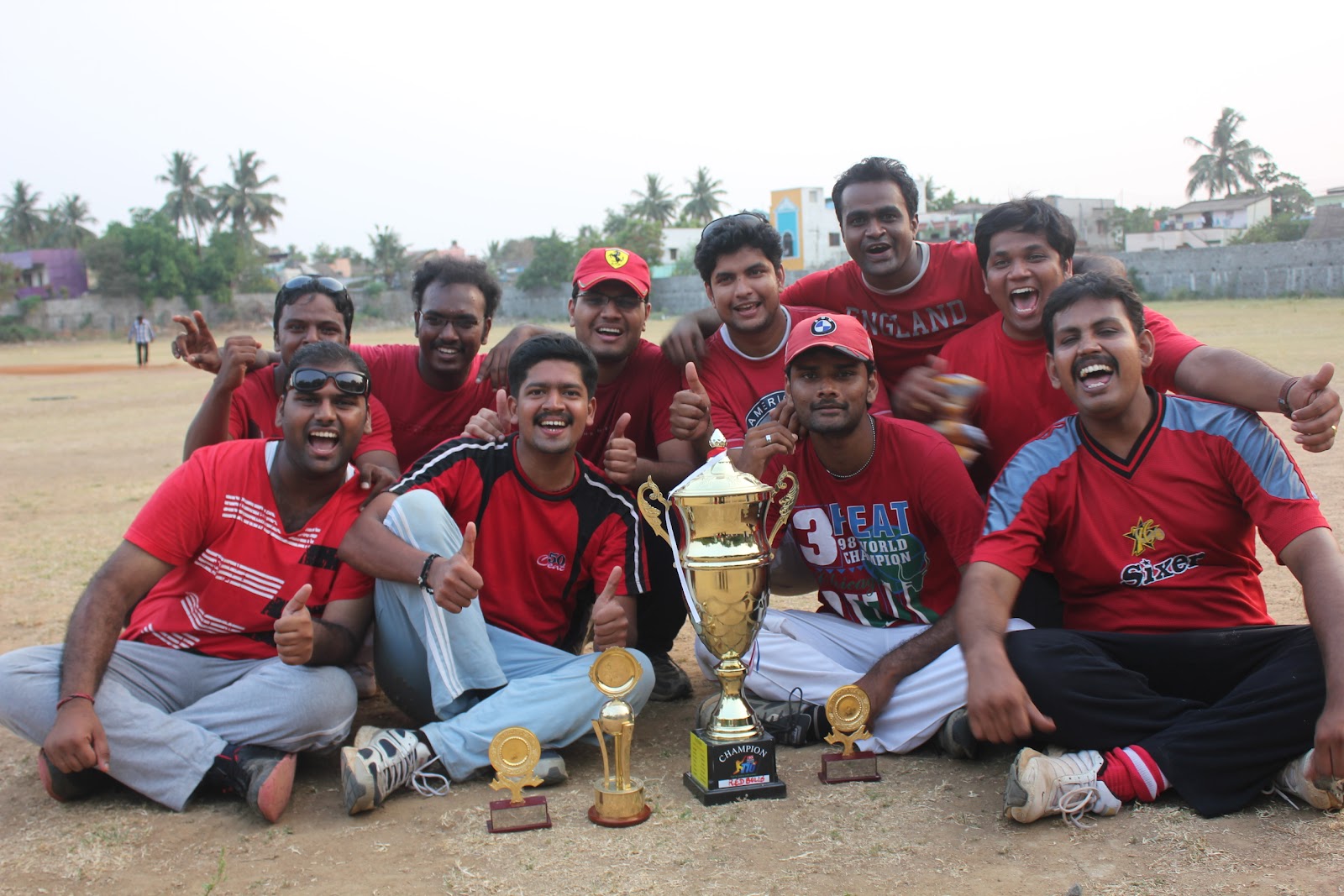
CBS Cricket league


CPL (CBS Premiere League), one of the many extra curricular activities, recently organised by the enterprising batch 6 of CBS, proved to be a dabangg.  On an early summer morning, the enthusiastic students of CBS geared up for a competitive cricket match supported by the dynamic crowd present to cheer them.What makes cricket exciting for CBS students is the uncertainty involved in the game and  as usual brain up heaved the brawn ..The strategic experiments of the students were not on paper this time but on the cricket field.


Outbound Programme @ Green Coconut

The outbound programme was filled  with fun and a lot of learning. The Ice breaking session helped the  winter batch students to get along and know each other well. Each and every activity was aimed at team building and leadership skills.

All set to leave


The first activity seems to be a piece of cake for Sunandini, who leads

Relaxing by the poolside

Now, this one's easy

Ready for action

Developing a strategy to move the three big bamboo poles
Malleshwar got too tired of watching people work
Testing

Change of plans

Now we all know what it means to struggle as a team


A twist


Chinna boldly leads others


Heated discussions challenging each other's ideologies

The ring struggles to pass

The pool helped to beat the heat

ouch...

Tuesday, 5 June 2012

Sam Moorthy delivers lecture at CBS

Sam Moorthy is a marketing and communications professional with more than 21 years of experience in working with leading FMCG markets. The lecture is about the consumer behavior of consumers in Central and Eastern Europe. He described in detail about the social and cultural aspects of Central and Eastern Europe and compared the market with Indian market. He spoke about the strategies followed by various FMCG multinationals to capture these markets. It is impolite to call someone after six on a Friday evening and the boss would regret if he did it and that is Czech Republic to you” is a statement which Mr Sam Moorthy made enlightening us with a new perspective on a country which is a part of Central Europe. The nuance in the statements can be conferred to the conservativeness of Czech culture and is very much common to the Indian culture. Mr. Sam Moorthy discussed the Czech culture through their films, literature, sports, food preferences, buying patterns and their nationalistic sentiments by connecting them with the Indian consumers.

The velvet divorce which is the diplomatic dissolution of czecho-slovakia and its post effects is similar to India-Pakistan partition. The economic dropdown of Czech and its uprise is very similar to our country. The families dine together, watch TV together and go out on family outings unlike the other European nations and American. They enter the homes sans footwear. Over a period of time we were wondering as to how this data could be useful to a bunch of marketing students sitting in Chennai. After a lot of head banging, we had our lower jaws hit the floor having discovered the hidden intention behind a presentation which was a perfect marketing dispenser of ideas, yet did not contain a word directly related to marketing. The idea across the table was that Indian corporatist could use Czech’s market research for their products instead of flooding money on their research.

There could be a diplomatic exchange of market Business Intelligence benefiting both countries from an industry perspective. Mr Sam Moorthy’s Knowledge sharing had an unadulterated fashion to it by not forcing any opinions on the students but making them to think from their own dimensions making them futuristic thinkers.

International Management students in Dubai for Internship, April 2012


An internship in Dubai - One of the world's most renowned business hubs was a dream come true to the students of International Business Management at Chennai Business School. As they set out seizing this wonderful opportunity, these young inquisitive minds have spent this stint in an attempt to understand the various kinds of business models as global players as well as their scope in such a competitive environment. Their main objective of their internship is to understand the scope of doing business in Dubai. They studied various industries like banking, Automobiles, Cosmetics, telecom, tourism and hospitality.

They visited various banks like Emirates NBD, First Gulf Bank and Abu Dhabi Commercial Bank to understand the accounting practices and the various policies and regulations adopted by the government. They also observed the consumer behavior by interacting with customers of Dubai origin and also foreign.
The tourism and hospitality industry in Dubai is flourishing. The hotel occupancy rates in Dubai are much more than other Emirate provinces. The students visited a few hotels to understand the various services provided to the customers and to understand their level of satisfaction. Customers generally do not compromise on the service they are offered. The hotels try hard to replicate the services provided by their competitors to stay ahead in business.

With respect to Automobiles, there are no manufacturing units in Dubai. Many Automobile companies like Toyota, BMW, Mercedes and Nissan are importing their products and accessories into Dubai. As Dubai is an international hub, the cars are exported to other countries from Dubai.

Indian Brands in Dubai struggle to compete with the International brands. The students met various industry experts like Mr Shailendra Malhotra of Himalaya to understand the performance of Himalaya in Dubai market, Mr Sampath, an independent consultant gave them details on the fundamentals of doing business in Dubai, Mr. Manoj who spoke on the fitness industry in Dubai and Mr Chandy Koshy explained about banking and financial industry in Dubai.